The 30 Best Acting Books Every Actor Should Read
The 30 best acting books, from Respect for Acting and Meisner on Acting to Audition and Acting in Film, sorted by technique, level and goal.
Some links in this article are affiliate links. If you buy through them, we may earn a small commission at no extra cost to you.
On this page 12 sections
- Quick picks: which acting book should you read first?
- All 30 acting books at a glance
- Foundational acting technique books
- Books for auditions and script analysis
- Voice and movement books for actors
- Improv and comedy books
- Books on acting for film and TV
- Books on the business of acting
- Acting history books
- How to choose an acting book
- Questions about acting books
- Keep training
The best acting books teach a working technique you can practice on your own. The essentials are Uta Hagen’s Respect for Acting, Stanislavski’s An Actor Prepares, Sanford Meisner on Acting and Michael Shurtleff’s Audition. Below are 30 acting books sorted by technique, skill level and goal, from first class to first agent.
We chose these books the way we would advise a friend starting out: by asking which ones acting teachers still assign, which ones working actors keep rereading and which ones fill a gap the others leave open. Each card tells you who the book is for and where to find it.
As an Amazon Associate, We Are Actors earns from qualifying purchases. Book links on this page go to Amazon; buying through them supports the site at no extra cost to you.
Quick picks: which acting book should you read first?
- Brand-new to acting: Respect for Acting by Uta Hagen, then A Practical Handbook for the Actor.
- Starting a Meisner class: Sanford Meisner on Acting and The Actor’s Art and Craft.
- Auditions and self-tapes: Audition by Michael Shurtleff and Acting in Film by Michael Caine.
- Improv and comedy: Impro by Keith Johnstone and Truth in Comedy.
- The business side: Acting as a Business and The Actor’s Life by Jenna Fischer.
All 30 acting books at a glance
| Book | Author | Technique or topic | Level |
|---|---|---|---|
| Respect for Acting | Uta Hagen | Hagen technique | Beginner |
| An Actor Prepares | Constantin Stanislavski | Stanislavski system | All levels |
| Building a Character | Constantin Stanislavski | Stanislavski system | Intermediate |
| Creating a Role | Constantin Stanislavski | Stanislavski system | Advanced |
| Sanford Meisner on Acting | Sanford Meisner and Dennis Longwell | Meisner technique | Beginner |
| The Actor’s Art and Craft | William Esper and Damon DiMarco | Meisner technique | Beginner |
| The Art of Acting | Stella Adler | Adler technique | All levels |
| A Dream of Passion | Lee Strasberg | Method acting | Intermediate |
| To the Actor | Michael Chekhov | Chekhov technique | Intermediate |
| A Practical Handbook for the Actor | Melissa Bruder and others | Practical Aesthetics | Beginner |
| True and False | David Mamet | Practical Aesthetics | Intermediate |
| The Actor and the Target | Declan Donnellan | Directing and rehearsal | Advanced |
| The Intent to Live | Larry Moss | Scene study | Intermediate |
| The Power of the Actor | Ivana Chubbuck | Chubbuck technique | Intermediate |
| Audition | Michael Shurtleff | Auditioning | All levels |
| Actions: The Actors’ Thesaurus | Marina Caldarone and Maggie Lloyd-Williams | Actioning | All levels |
| Freeing the Natural Voice | Kristin Linklater | Linklater voice | All levels |
| The Viewpoints Book | Anne Bogart and Tina Landau | Viewpoints | Intermediate |
| Improvisation for the Theater | Viola Spolin | Theater games | All levels |
| Impro | Keith Johnstone | Status work | All levels |
| Truth in Comedy | Charna Halpern, Del Close and Kim “Howard” Johnson | Long-form improv | Intermediate |
| Improvise: Scene from the Inside Out | Mick Napier | Improv scene work | Intermediate |
| Acting in Film | Michael Caine | On-camera technique | All levels |
| Secrets of Screen Acting | Patrick Tucker | On-camera technique | Intermediate |
| Acting for the Camera | Tony Barr | On-camera technique | Beginner |
| Acting as a Business | Brian O’Neil | Career strategy | Beginner |
| Self-Management for Actors | Bonnie Gillespie | Career strategy | Beginner |
| The Actor’s Life: A Survival Guide | Jenna Fischer | Career memoir | Beginner |
| The Fervent Years | Harold Clurman | Group Theatre | All levels |
| The Method: How the Twentieth Century Learned to Act | Isaac Butler | Acting history | All levels |
Foundational acting technique books
Every major acting school in the US still teaches from the ideas in these books. Start here if you have never trained, or come back here when a class leaves you with more questions than answers. If you’re still working out where acting fits in your life, our step-by-step guide on how to become an actor maps the whole path.
Respect for ActingUta Hagen with Haskel Frankel
01
Respect for Acting
Uta Hagen with Haskel Frankel (1973)
Hagen technique Beginner Best for: Your first acting book
Uta Hagen taught for decades at HB Studio in New York, and Respect for Acting reads like a semester in her class. She explains how to build a character from your own observed behavior, then gives you her object exercises to practice alone. It is the most practical first book on the list, and the one acting teachers recommend most often.
02
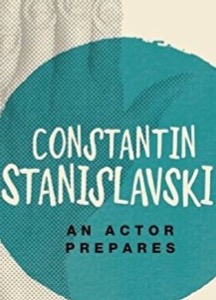
An Actor Prepares
Constantin Stanislavski (1936)
Stanislavski system All levels Best for: Understanding where modern acting comes from
Stanislavski co-founded the Moscow Art Theatre and wrote the first serious attempt to turn acting into a teachable craft. This book, told through a fictional student named Kostya, introduces objectives, given circumstances, units and emotion memory. The 1936 Elizabeth Hapgood translation is abridged, so readers who want the full text should look for Jean Benedetti’s 2008 translation, An Actor’s Work.
03
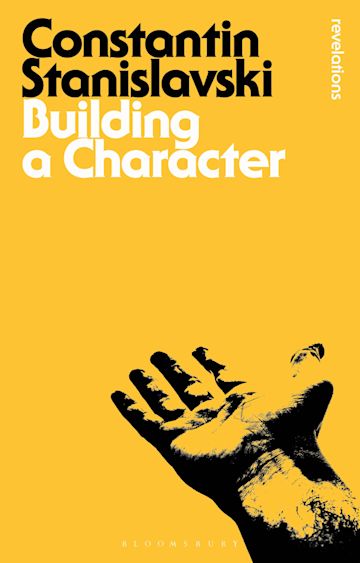
Building a Character
Constantin Stanislavski (1949)
Stanislavski system Intermediate Best for: Physical and vocal transformation
The second book in Stanislavski’s series moves from the inner life of a role to the outside: posture, movement, diction, tempo and rhythm. Read it after An Actor Prepares, when you are ready to change how a character walks and speaks rather than only how they feel.
04
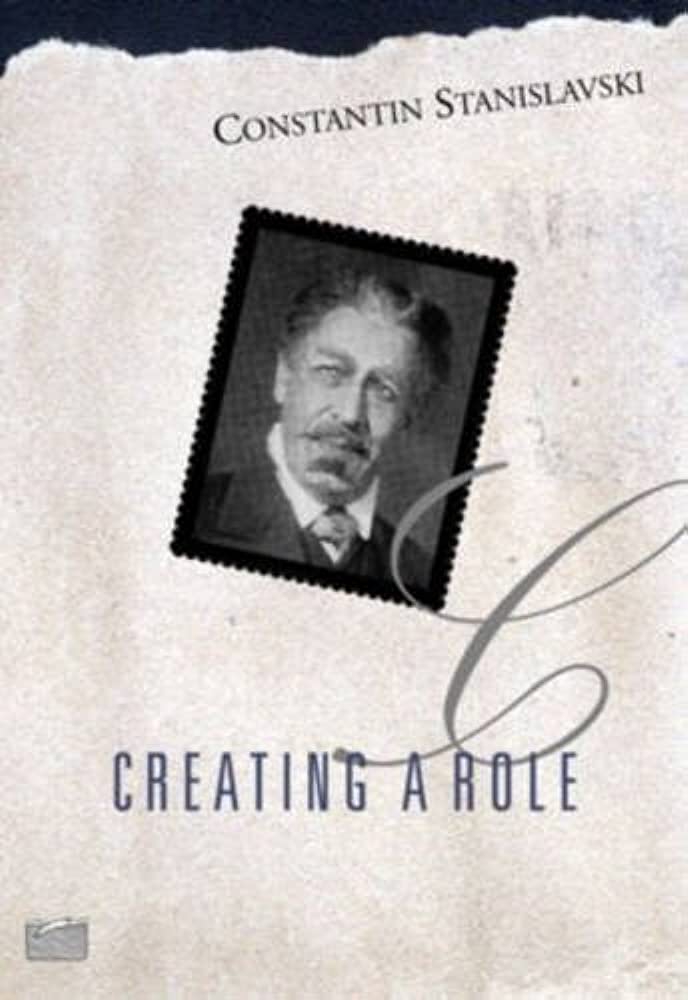
Creating a Role
Constantin Stanislavski (1961)
Stanislavski system Advanced Best for: Working on a full play
The last book in the series follows a company preparing Othello and other plays from first reading to performance. It shows Stanislavski’s later thinking, including the method of physical actions, and suits actors who already know the basics and want a process for a whole script.
Sanford Meisner on ActingSanford Meisner and Dennis Longwell
05
Sanford Meisner on Acting
Sanford Meisner and Dennis Longwell (1987)
Meisner technique Beginner Best for: Learning to listen and react
Written as a transcript of a 15-month class at the Neighborhood Playhouse, this is the clearest record of how Meisner taught. You watch students work through the repetition exercise and slowly stop performing and start reacting truthfully to a partner. Read it before your first Meisner class so the exercises make sense on day one.
06
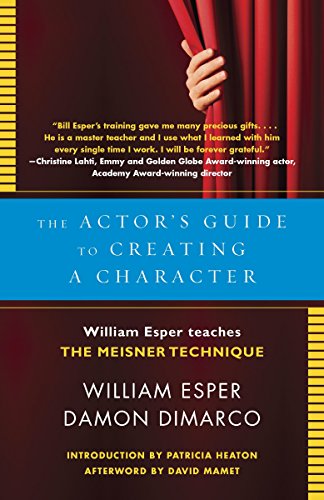
The Actor’s Art and Craft
William Esper and Damon DiMarco (2008)
Meisner technique Beginner Best for: A structured Meisner program
William Esper trained under Sanford Meisner and ran his own studio in New York for decades. This book follows a group of first-year students through his program step by step, from repetition to independent activities to text. Where Meisner’s own book captures his voice, Esper’s explains the reasoning behind each exercise.
07
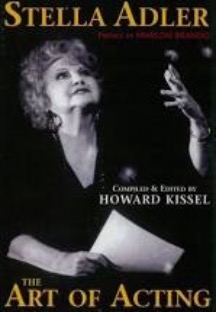
The Art of Acting
Stella Adler (2000)
Adler technique All levels Best for: Actors who work from imagination
Stella Adler worked with Stanislavski in Paris in 1934 and came back convinced that actors should build roles from imagination and the given circumstances of the play rather than from their own private memories. Critic Howard Kissel shaped her classroom lectures into a series of lessons, and the book keeps her bold, demanding voice.
08
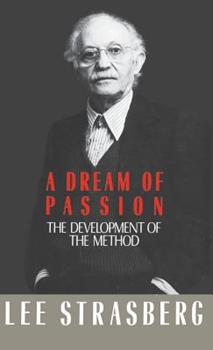
A Dream of Passion
Lee Strasberg (1987)
Method acting Intermediate Best for: Understanding the Method
Lee Strasberg led the Actors Studio from 1951 and became the face of Method acting in America. Published after his death, this book explains in his own words why he built his training around relaxation, concentration and affective memory, and where he believed Stanislavski had been misunderstood.
09
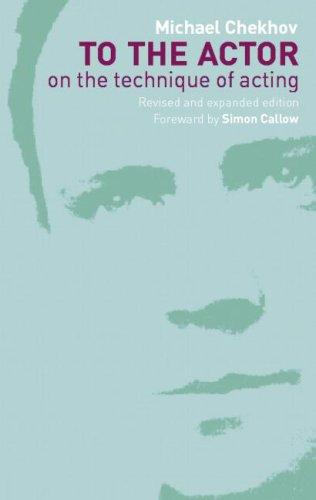
To the Actor
Michael Chekhov (1953)
Chekhov technique Intermediate Best for: Physical and imaginative actors
Michael Chekhov, nephew of the playwright Anton Chekhov, was one of Stanislavski’s most gifted students before he went his own way. To the Actor teaches his psychological gesture, atmospheres and imaginary body, tools that let you find a character through movement and imagery instead of personal memory.
A Practical Handbook for the ActorMelissa Bruder and others
10
A Practical Handbook for the Actor
Melissa Bruder, Lee Michael Cohn, Madeleine Olnek, Nathaniel Pollack, Robert Previto and Scott Zigler (1986)
Practical Aesthetics Beginner Best for: A short, no-nonsense method
Six students of David Mamet and William H. Macy wrote this slim guide to Practical Aesthetics, the technique taught at the Atlantic Theater Company. It breaks every scene into a literal action, a want and an “as if,” and you can read it in an afternoon. Many actors keep it in their bag for script work before auditions.
11
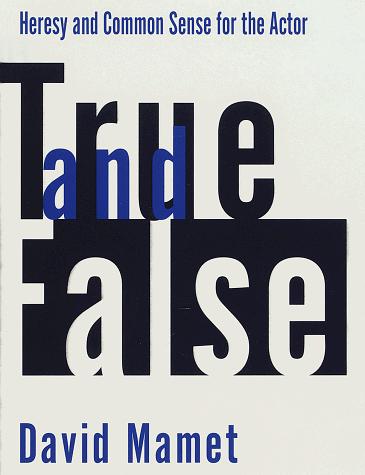
True and False
David Mamet (1997)
Practical Aesthetics Intermediate Best for: Actors tired of overthinking
The Pulitzer Prize-winning playwright argues that most acting training gets in the way: say the words clearly, want something from your partner and let the play do the rest. It is short, provocative and deliberately one-sided, so read it as a challenge to the other books on this list rather than a replacement for them.
12
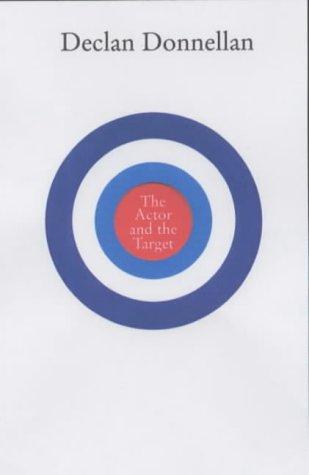
The Actor and the Target
Declan Donnellan (2002)
Directing and rehearsal Advanced Best for: Getting unstuck in rehearsal
Declan Donnellan co-founded the theatre company Cheek by Jowl, and his book starts from one idea: an actor freezes when attention turns inward, and comes alive when it is fixed on a target outside themselves. He uses that idea to diagnose the most common acting blocks, from nerves to self-consciousness.
13
The Intent to Live
Larry Moss (2005)
Scene study Intermediate Best for: Deepening scene work
Larry Moss has coached Oscar-winning performances and taught working actors for decades. His book blends Stanislavski, Meisner and Hagen into a scene-study process built around intention, obstacles and personal connection, with examples from his own classes. We talked with him about his teaching on the We Are Actors podcast.
14
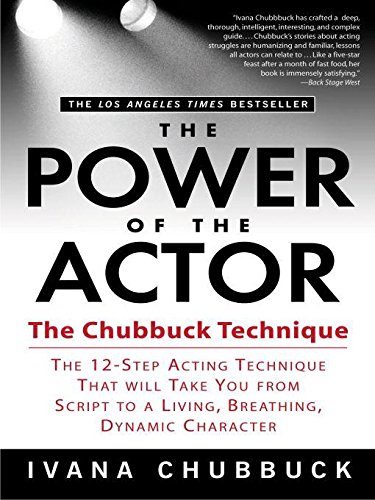
The Power of the Actor
Ivana Chubbuck (2004)
Chubbuck technique Intermediate Best for: Emotionally driven roles
Ivana Chubbuck’s 12-step technique turns script analysis into a checklist: overall objective, scene objective, obstacles, substitution, inner objects and more. Her approach is popular with film actors because it gives you a repeatable process for high-stakes emotional scenes, though some readers find the substitution work intense.
Not sure which of these techniques suits you? Our guide to finding the right acting class compares how studios teach them, and script analysis for actors shows how the same tools apply to a real scene.
Books for auditions and script analysis
These two books are about what happens before you act: reading the scene, choosing what you want and turning that into something a casting director can see in a few minutes.
15
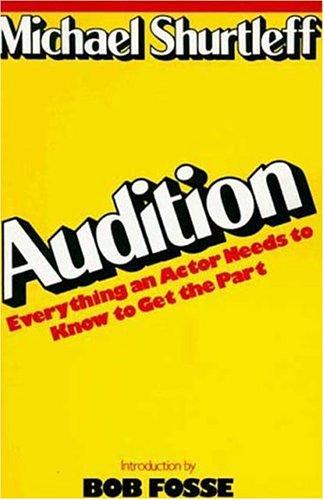
Audition
Michael Shurtleff (1978)
Auditioning All levels Best for: Every audition and self-tape
Michael Shurtleff cast for Broadway and film for years, and he wrote this book after watching thousands of actors make the same mistakes. His 12 guideposts, including relationship, conflict, the moment before and humor, are a fast way to break down any audition scene. If you only buy one book for auditions, make it this one. Pair it with our guide on how to prepare for an audition.
16
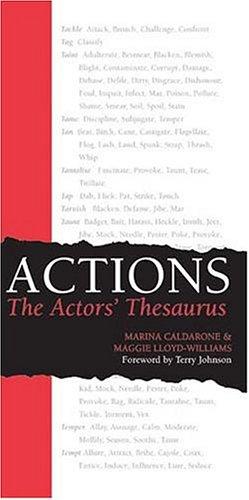
Actions: The Actors’ Thesaurus
Marina Caldarone and Maggie Lloyd-Williams (2004)
Actioning All levels Best for: Choosing playable verbs
This reference book lists hundreds of transitive verbs, grouped by meaning, so you can assign a specific action to every line, such as to flatter, to needle or to reassure. It is a staple of UK drama schools and a quick fix when your choices feel general. Our list of active verbs for actors is a good free starting point.
Voice and movement books for actors
A strong voice and an expressive body are what let your choices reach the back row or read on camera. These two books are standard texts in conservatory voice and movement classes.
17
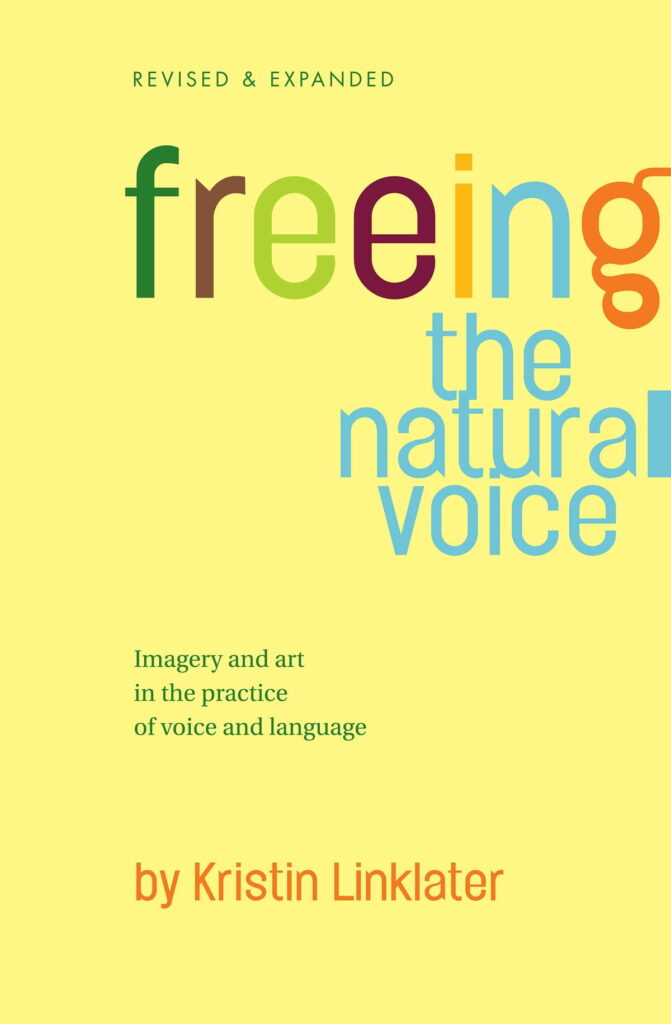
Freeing the Natural Voice
Kristin Linklater (1976)
Linklater voice All levels Best for: Releasing vocal tension
Kristin Linklater’s progression of exercises works from breath and relaxation up to resonance and range, with the goal of removing the habits that block your natural voice. Many BFA and MFA programs use it in the first year. Work through it slowly, a few exercises a week, alongside our vocal warmups for actors.
18
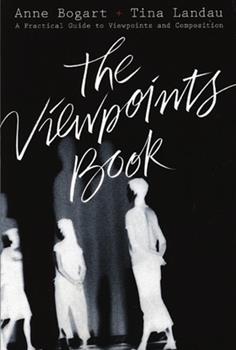
The Viewpoints Book
Anne Bogart and Tina Landau (2005)
Viewpoints Intermediate Best for: Ensemble and physical theater
Director Anne Bogart and writer-director Tina Landau adapted choreographer Mary Overlie’s Six Viewpoints into a training method built on time and space: tempo, duration, repetition, shape, gesture, architecture and spatial relationship. The book is full of group exercises, which makes it as useful for directors and ensembles as for individual actors.
Improv and comedy books
Improv training makes you a better listener and a braver actor, and comedy auditions reward it directly. These four books cover the field from classroom games to long-form performance.
19
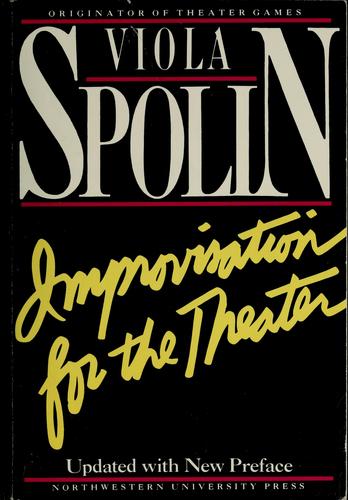
Improvisation for the Theater
Viola Spolin (1963)
Theater games All levels Best for: Teachers and beginner actors
Viola Spolin invented theater games as a way to teach acting through play rather than lecture, and this book collects more than 200 of them. Her son Paul Sills co-founded The Second City, which is why her work sits at the root of American improv. Teachers can lift the games straight into class, and our drama games list builds on the same idea.
20
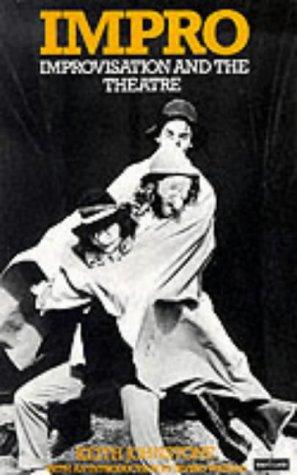
Impro
Keith Johnstone (1979)
Status work All levels Best for: Spontaneity and status
Keith Johnstone developed his ideas teaching at London’s Royal Court Theatre, and Impro is still the best book on status, the constant push and pull of power between characters. His chapters on spontaneity and masks are just as useful for scripted actors who freeze up or play it safe.
21
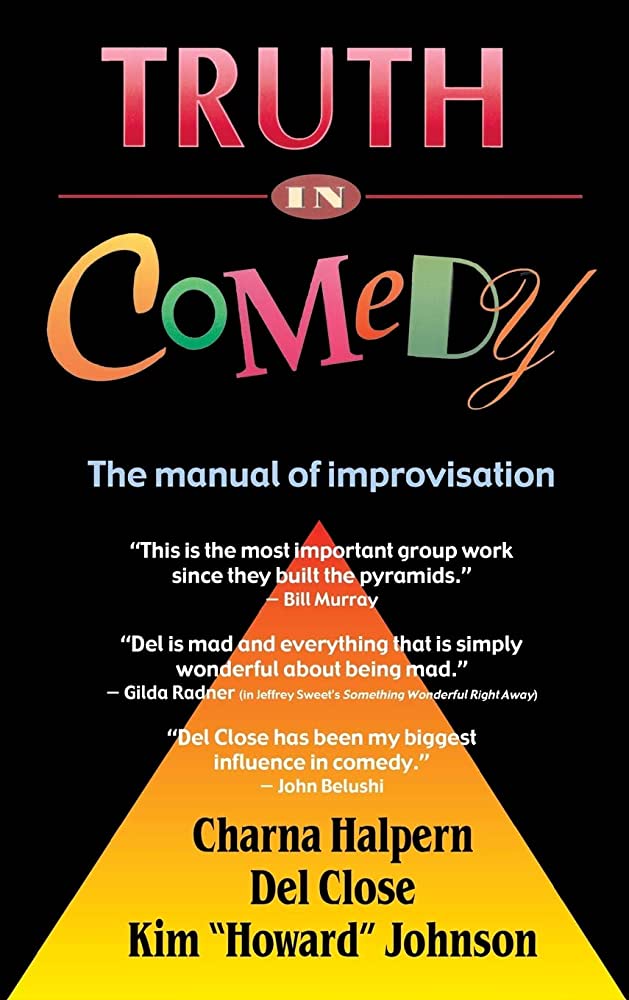
Truth in Comedy
Charna Halpern, Del Close and Kim “Howard” Johnson (1994)
Long-form improv Intermediate Best for: Long-form improvisers
This is the manual for the Harold, the long-form improv structure that Del Close developed and Charna Halpern taught at ImprovOlympic in Chicago. Its main lesson, that honest reactions are funnier than invented jokes, applies to sitcom and comedy auditions too.
22
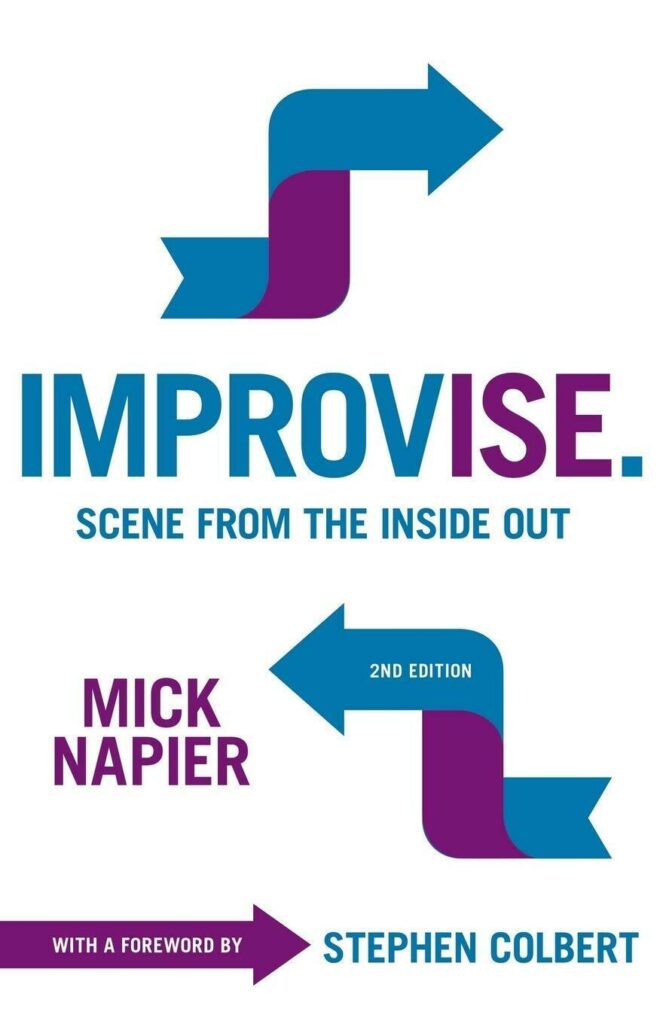
Improvise: Scene from the Inside Out
Mick Napier (2004)
Improv scene work Intermediate Best for: Breaking improv rules
Mick Napier founded the Annoyance Theatre in Chicago and has directed at The Second City. His book questions the usual improv rules and argues for making a strong choice at the top of a scene and committing to it. It is short, funny and a good corrective after a few years of cautious classes.
Books on acting for film and TV
Acting on camera uses the same truth as acting on stage, at a smaller size and with more technical demands. These books explain what changes when the lens is a few feet from your face.
Acting in FilmMichael Caine
23
Acting in Film
Michael Caine (1990)
On-camera technique All levels Best for: Moving from stage to screen
Based on the masterclass Michael Caine filmed for the BBC, this book covers the practical habits that separate film actors from stage actors, from not blinking in close-ups to finding your light. It is short, funny and full of set stories, and pairs well with our guide to setting up for self-tapes.
24
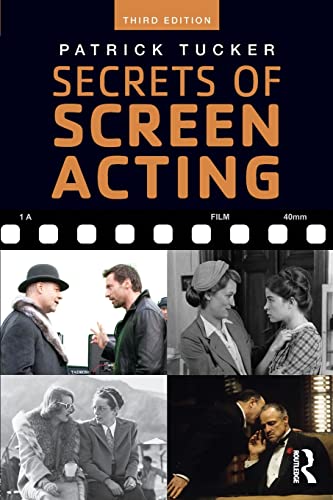
Secrets of Screen Acting
Patrick Tucker
On-camera technique Intermediate Best for: Technical screen skills
British director Patrick Tucker explains how shot size, eyelines, continuity and editing affect a performance, and how to adjust for each. It is now in its fourth edition from Routledge, and it is the most technical book on this list, which makes it useful for actors who already have training but feel lost on set.
25
Acting for the Camera
Tony Barr
On-camera technique Beginner Best for: Your first on-camera class
Tony Barr’s long-running textbook covers the basics of screen acting: hitting marks, matching action between takes, working in close-up and keeping a performance alive through many setups. It reads like a classroom course and suits actors preparing for their first student film or on-camera class.
Books on the business of acting
Talent gets you in the room, but the business side keeps you working. These books cover agents, marketing and the day-to-day reality of an acting career.
26
Acting as a Business
Brian O’Neil
Career strategy Beginner Best for: Agents and marketing
Brian O’Neil’s guide explains how agents and casting directors look at actors, how to research and target the right representation, and how to market yourself with headshots, résumés and follow-ups. It has been updated through several editions, so buy the newest one. Then read our guide on agents vs. managers.
27
Self-Management for Actors
Bonnie Gillespie
Career strategy Beginner Best for: Taking charge of your career
Casting director and actor coach Bonnie Gillespie wrote this book for actors who want to stop waiting for permission. It walks you through defining your type, building a target list and setting up a system to track your marketing. The fourth edition is the most current. See also our tips on how to brand yourself as an actor.
28
The Actor’s Life: A Survival Guide
Jenna Fischer (2017)
Career memoir Beginner Best for: New actors in LA or New York
Jenna Fischer spent years auditioning and working day jobs in Los Angeles before she was cast as Pam on The Office. Her book is an honest, practical guide to that waiting period: finding an agent, joining a theater company, handling rejection and paying rent. Our list of survival jobs for actors picks up where her money chapter leaves off.
Acting history books
Knowing where your technique came from helps you use it better. These two books tell the story of how American actor training was born.
29
The Fervent Years
Harold Clurman (1945)
Group Theatre All levels Best for: Theater history
Harold Clurman co-founded the Group Theatre in 1931 with Lee Strasberg and Cheryl Crawford, and this is his account of its ten years. The company included Stella Adler, Sanford Meisner, Elia Kazan and Clifford Odets, so this book explains why so many American acting techniques grew from the same room and the same arguments.
30
The Method: How the Twentieth Century Learned to Act
Isaac Butler (2022)
Acting history All levels Best for: Understanding Method acting
Isaac Butler traces Stanislavski’s system from Moscow to the Group Theatre, the Actors Studio and Hollywood, separating what the Method actually is from the myths about actors staying in character. It is the most readable modern history of actor training, and a useful companion to our explainer on method acting.
Find The Method: How the Twentieth Century Learned to Act on Amazon
How to choose an acting book
Match the book to the problem in front of you. If you have never trained, pick one technique book and do the exercises rather than reading five books about acting. If you are in class, read the book your teacher’s technique comes from: Meisner students should read Meisner and Esper, Method students Strasberg, Adler students Adler.
If you are already working, read for the gap. Actors who freeze in auditions get the most from Shurtleff and Donnellan, stage actors moving to screen from Caine and Tucker, and actors who feel stuck in their careers from O’Neil, Gillespie and Fischer. Reading is not a replacement for doing, so try every exercise out loud and on your feet.
Questions about acting books
What is the best acting book for beginners?
Respect for Acting by Uta Hagen is the best acting book for beginners. It explains a complete technique in plain language and gives you exercises to practice alone. A Practical Handbook for the Actor is a shorter alternative, and Michael Shurtleff’s Audition is the best first book on auditioning.
What is the most influential acting book of all time?
An Actor Prepares by Constantin Stanislavski is the most influential acting book ever written. It introduced objectives, given circumstances and emotion memory, and nearly every modern technique, including Method acting, the Meisner technique and the Adler technique, grew from Stanislavski’s system.
Which book teaches the Meisner technique?
Sanford Meisner on Acting, written with Dennis Longwell, records Meisner’s own class and the repetition exercise at the heart of his technique. The Actor’s Art and Craft by William Esper, one of Meisner’s leading students, explains the same training step by step.
What are the best books for screen acting?
The best books for screen acting are Acting in Film by Michael Caine, Secrets of Screen Acting by Patrick Tucker and Acting for the Camera by Tony Barr. Together they cover how shot size, eyelines and continuity change a performance.
Is Method acting the same as the Stanislavski system?
No. Method acting is Lee Strasberg’s American adaptation of Stanislavski’s early ideas, with a strong focus on relaxation and affective memory. Stanislavski later moved toward physical actions, and teachers like Stella Adler and Sanford Meisner built different techniques from his work.
Can you learn acting from books alone?
Books can teach you a technique, a vocabulary and exercises to practice, but acting is learned by doing it in front of other people. Use books to prepare for class, to deepen what you learn there and to keep training between jobs.
Keep training
Put what you read into practice. Break down your next scene with our guide to building a character, find material in our monologue database and read the plays these teachers loved in our list of the greatest plays of all time.
Know an actor who’d find this useful?